Physical Address
304 North Cardinal St.
Dorchester Center, MA 02124
Physical Address
304 North Cardinal St.
Dorchester Center, MA 02124

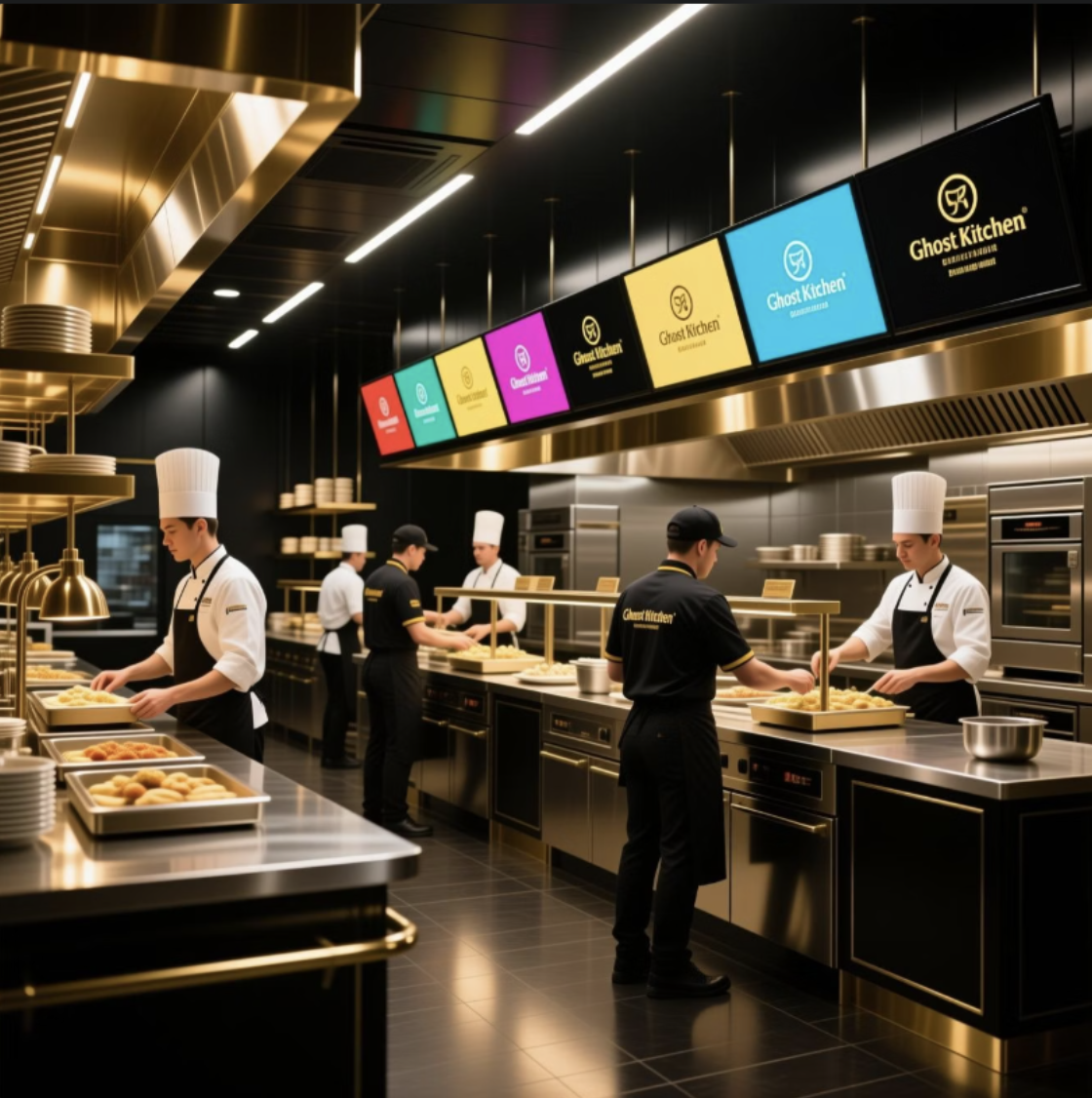
Kitchenverse™ presents itself as a franchise built around the operational efficiency of ghost kitchens, offering franchisees the ability to manage three distinct food brands from a single facility. The system was initially tested in Portland, where the model focused on optimizing kitchen workflows, maximizing ingredient overlap, and coordinating delivery-platform operations across multiple menus.
The franchise requires a $50,000 startup investment, which includes the license, menu development for up to three concepts, branding material, packaging templates, and onboarding support. The arrangement also carries a 10% royalty fee applied to ongoing revenue. Kitchenverse projects that operators may reach approximately $30,000 in monthly profit by the third month, though the actual figures depend on a range of factors: delivery density, menu pricing, app-based traffic, labor efficiency, and operator experience.
The distinguishing feature of Kitchenverse is its diversification strategy. Rather than relying on the performance of a single concept, operators launch multiple brands simultaneously. Each menu targets different consumer segments — late-night orders, comfort-food demand, healthy options, or budget-friendly meals. This model aims to stabilize earnings by spreading risk across several identities, a tactic similar to revenue hedging in portfolio-based businesses.
From a systems perspective, the model reduces two major costs associated with traditional restaurants: staffing and real estate. Ghost kitchens do not require front-of-house operations, customer-facing décor, or significant square footage. They also allow for centralized labor; a single team can prepare dishes for multiple brands using overlapping ingredients, which may reduce waste and streamline procurement.
Delivery-platform integration is a central element. Kitchenverse provides structured onboarding for apps such as DoorDash and UberEats, ensuring that each brand launches with its own digital storefront, menu photos, and packaging identity. This approach converts the physical kitchen into a multi-channel distribution point, where visibility depends more on search ranking, customer ratings, and imagery than on physical location.
The franchise package also standardizes visual and branding materials. Operators receive predefined logos, menu layouts, photography guidelines, and packaging designs, which ensures consistency across regions and reduces the need for external marketing services. This provides a level of uniformity similar to that of traditional franchises, though adapted for delivery-only commerce.
Operationally, the Kitchenverse model is most effective in areas with high delivery-app penetration. In markets where customers regularly browse multiple cuisine types on ordering platforms, multi-brand kitchens may have a competitive advantage due to their ability to appear under several categories simultaneously. Conversely, markets with low delivery density or limited late-night traffic may produce slower adoption timelines.
One consideration is the reliance on external platforms. Delivery apps typically charge fees that affect margins, and operators must adapt pricing to maintain profitability while remaining competitive. Kitchenverse’s financial projections assume consistent demand across all three brands, efficient labor scheduling, and strategic menu pricing that accounts for app-related costs.
The question of scalability remains tied to consistency. The franchise’s success depends on whether standardized menus and branding materials can maintain quality across varied geographic regions and operator skill levels. The Portland pilot offers a baseline, but long-term performance data across diverse markets will be necessary to determine the model’s durability.
Kitchenverse’s approach does not attempt to replicate traditional dining. Instead, it formalizes a delivery-only structure into a franchise-ready system. It offers a predefined operational method that reduces creative labor while increasing operational complexity through multiple menus. For some entrepreneurs, this model may provide an accessible entry point to the food industry; for others, the workload of running three distinct brands may introduce challenges not found in single-concept kitchens.
As ghost kitchens expand nationwide, Kitchenverse represents one structured attempt to standardize a sector that has grown rapidly but unevenly. Its multi-brand strategy offers both potential stability and operational demands, illustrating how the next stage of delivery-based dining may function.
